

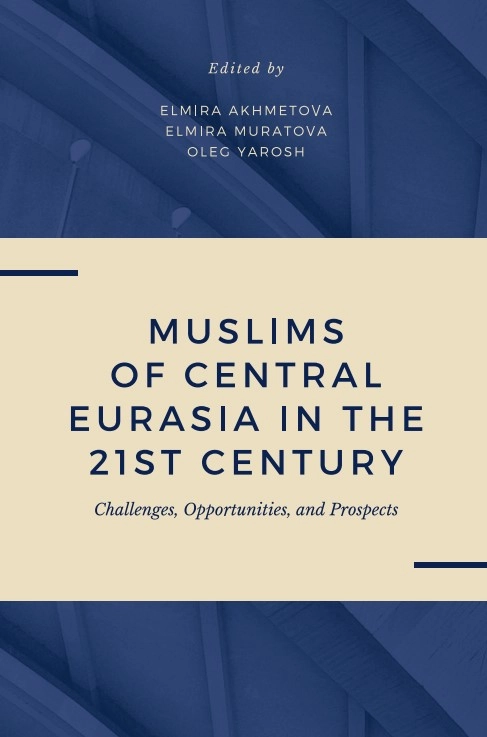
Muslims of Central Eurasia in the 21st Century: Challenges, Opportunities, and Prospects
Author: Elmira Akhmetova, Elmira Muratova, Oleg YaroshMuslims of Central Eurasia in the 21st Century: Challenges, Opportunities, and Prospects







Part I. Secularism and Muslims in Central Eurasia: Comprising three chapters, this part examines how secular governments in post-Soviet Central Asia and Russia administer and regulate Islam. It analyzes state-religion policies in Kazakhstan, the lingering influence of Soviet pedagogy, and the integration of national and religious values in Tatar schools.
Part II. Post-Soviet transformations and search for identity: These chapters explore the ongoing identity transformations among Muslims in Bashkortostan, Azerbaijan, and Belarus. It addresses the revival of Islamic traditions in modern secular realities and examines cultural and religious cooperation between Belarus and Turkey.
Part III. Muslims and the challenges of outside influence: This section investigates historical and modern external influences on Muslim identity. It covers the Russian Empire's policies in northwestern Azerbaijan, the assimilation of Muslim minorities in communist Bulgaria, and the cultural perception of Muslims in Saint Petersburg.
Part IV. Muslim minorities in challenging times: Focusing on minority struggles, this part discusses the core values of Crimean Tatars under shifting political spaces and the plight and migration patterns of Ukrainian Meskhetian Turks affected by recent geopolitical conflicts and wars.
Part V. Public Islam and civil engagement in contemporary societies: These chapters examine public Islam and civic participation in Central-Eastern Europe. It features studies on Ukrainian Muslim organizations, strategies for promoting “European Islam,” and the role of social ethics in managing ethnic diversity within the CIS.
Part VI. (New) media, agenda, and transmission of Islamic knowledge: This part highlights the role of media in spreading Islamic knowledge. It evaluates the impact of the official “Hidoyat” journal in Uzbekistan and analyzes how Russian Muslims construct political and religious agendas in virtual spaces.
Part VII. Youth identity, movements, and values: Focused on the younger generation, these chapters explore the evolving religious identity of Kazakhstani youth, the transition to online learning in Islamic colleges in Kazakhstan, and the rise of ultra-right youth movements and Islamophobia in Georgia.
Part VIII. Islamic teaching and discourse: The final section delves into contemporary Islamic scholarship and epistemology. It covers the teaching of critical thinking, the integration of Islamic concepts into schema psychology, and the representation of Muslims in modern Ukrainian historiography.
The volume is logically structured into eight thematic parts. Part I explores the conceptualization of secularism and state control over religious life. In Central Asian states like Kazakhstan, Uzbekistan, and Tajikistan, the state actively regulates and controls religious expression through specialized administrative organs. This is contrasted with innovative hybrid educational models, such as the Tatar national schools in Russia, which successfully integrate national identity with religious practice within a secular legislative framework.
Part II and Part III focus on post-Soviet identity reconfigurations and the impact of historical and contemporary external influences. The authors examine how the concept of “traditional Islam” is utilized by state and social actors in Azerbaijan and Bashkortostan to maintain stability and counter radical foreign ideologies, while sometimes acting as an obstacle to local reform. The book also traces the long-term effects of imperial policies, such as the Russian Empire’s Christianization campaigns among the Ingiloys in northwestern Azerbaijan and the communist assimilation programs in Bulgaria, showing how these historical events continue to influence ethnic and religious boundaries today.
Part IV addresses the lived experiences of Muslim minorities during times of crisis. Through case studies on Crimean Tatars and Ukrainian Meskhetian (Ahiska) Turks, the volume highlights how geopolitical shifts, annexation, and active military conflicts have severely impacted these communities, forcing them to re-evaluate their values, migration strategies, and political loyalties.
Part V and Part VI examine the concepts of Public Islam, civic engagement, and the role of new media in transmitting religious knowledge. In Ukraine and other Central-Eastern European countries, Muslim organizations employ diverse public strategies—such as historical traditionalism and civic moderation—to advocate for minority rights and integration. Simultaneously, digital platforms and traditional journals like “Hidoyat” in Uzbekistan serve as contested spaces where official, state-sanctioned religious narratives compete with decentralized, online interpretations of Islam.
Finally, Part VII and Part VIII look toward the future by analyzing youth values, Islamic education, and contemporary theological discourses. The chapters discuss the rise of “nominal religiosity” and nationalism among Kazakhstani youth, the challenges of online Islamic education in the post-pandemic era, and the growth of Islamophobia in Georgia. The volume concludes with advanced academic and psychological discussions, showcasing how Islamic epistemology can foster critical thinking and how modern cognitive-behavioral therapies can be harmonized with traditional Islamic concepts of the soul (*nafs*) and heart (*qalb*). Collectively, the volume presents Central Eurasian Islam as a dynamic and evolving mosaic of accommodation, resistance, and integration.
The Introduction, authored by the editors Elmira Akhmetova, Elmira Muratova, and Oleg Yarosh, establishes the conceptual and historical framework of the entire volume. The editors introduce “Central Eurasia” as a dynamic region comprising post-communist territories where Muslim communities share a common historical legacy of Soviet rule, followed by a rapid religious resurgence over the last three decades. They explain that the volume consists of selected papers presented at the 6th Forum titled “Central Eurasian Muslims in the 21st Century: Challenges, Opportunities, and Prospects,” held in Istanbul, Türkiye, in October 2023. This forum was organized by the Institute of Knowledge Integration (Georgia) and the International Institute of Islamic Thought (USA). The editors highlight that while numerous books have explored local Islamic revivals, very few have approached Central Eurasian Muslims as a unified subject of study with shared historical trajectories and contemporary challenges.
The Introduction provides a roadmap of the book’s eight-part structure, outlining how the chapters weave together themes of state policy, identity reconstruction, external influences, public engagement, and Islamic scholarship. The editors emphasize that the volume is bilingual, containing twelve chapters in English and ten in Russian, reflecting the academic plurality of the region. They argue that the post-Soviet transition is not a simple “revival” of pre-communist practices but rather a “reinvention” of Islam shaped by transnational networks, state secularism, and local cultural dynamics. By addressing the interaction between ethnic, religious, and civic identities, the Introduction sets a scholarly tone that balances sociological, historical, theological, and political perspectives, inviting readers to view the contemporary Eurasian Muslim experience as a complex, multifaceted mosaic rather than a monolithic block.
Part I. Secularism and Muslims in Central Eurasia:
This section explores the intricate relationship between secular states and Muslim communities, focusing primarily on post-Soviet Central Asian republics and the Russian Federation. It consists of three chapters that analyze the administrative, legal, and educational mechanisms used by governments to regulate Islamic expression.
In Chapter 1, Rouslan Jalil examines state-religion interactions in Central Asia, arguing that the region's interpretation of secularism goes beyond the traditional separation of church and state. Instead, it manifests as active state intervention and control over religious affairs, carried out through specialized state organs like “Committees for Religious Affairs.” Jalil identifies three main drivers behind this strict administrative control: the lingering legacy of Soviet-era institutions (such as the Council for Religious Affairs), heightened security concerns regarding religious radicalization, and a prevalent elite perception of Islamic activism as a counter-modernist movement.
Chapter 2, written by Damira Sikhimbayeva, focuses on Kazakhstan's state-confessional policy. Sikhimbayeva advocates for the implementation of a liberal, “open” model of secularism in Kazakhstan, where the state maintains neutrality but allows for public religious expression, rather than pushing religion entirely into the private sphere. She notes that current Kazakh policies are often influenced by the Soviet atheist legacy and a narrow understanding of secularism. Sikhimbayeva argues that creating a harmonious relationship between Islam and secularism is vital for maintaining national unity and political stability in a country with a Muslim majority.
In Chapter 3, Kamil Nasibullov analyzes the convergence of national and religious elements in the post-colonial context of Tatar national schools in the Russian Federation. He discusses how these schools serve as hybrid institutions that accommodate the religious needs of Muslim families while strictly adhering to secular Russian legislation. Nasibullov suggests that this cooperative model, which allows for informal religious practices (like performing prayers) and provides halal food within a state-approved curriculum, represents a successful approach to educational inclusivity that could be applied in other Muslim-majority regions of Russia. Collectively, these chapters illustrate that secularism in Central Eurasia is not a static concept but a contested political and cultural space.
Part II. Post-Soviet transformations and search for identity:
This section delves into the complex processes of identity reconfiguration among Muslims in the post-Soviet space, examining case studies from Bashkortostan, Azerbaijan, and Belarus. The three chapters in this part analyze how local communities reconstruct their religious identities in response to political transitions, globalization, and historical ruptures.
In Chapter 4, Zilya Khabibullina examines the religious landscape of Bashkortostan, focusing on the search for identity under conditions of “interrupted tradition.” Khabibullina explains how the aggressive atheistic policies of the Soviet Union decimated Bashkir religious institutions, leaving the post-Soviet generation with a fragmented understanding of Islam. The contemporary revival is characterized by intense internal debates within the Bashkir community regarding which form of Islam is most compatible with Bashkir national identity. Khabibullina highlights several obstacles to this search, including the lack of organizational unity, administrative fragmentation between different spiritual boards (the Central Spiritual Board of Muslims and the Spiritual Board of Muslims of the Republic of Bashkortostan), and ideological competition between various Islamic currents.
Chapter 5, authored by Leyla Melikova, explores the role of Islam in the self-identification of Azerbaijani Muslims. Melikova focuses on the political and cultural deployment of the concept of “traditional Islam” in contemporary Azerbaijan. She argues that while “traditional Islam” is promoted by the state to foster inter-sectarian tolerance between Sunnis and Shiites and to serve as a barrier against radical foreign influences, it can also act as an obstacle to necessary modernization and reformist trends within the local Muslim community.
In Chapter 6, Zorina Kanapatskaya analyzes the historical and contemporary dimensions of cultural and religious cooperation between the Muslim community of Belarus (the Belarusian Tatars) and Turkey. Kanapatskaya traces these relations back to the Ottoman era and details how, after the restoration of religious freedom in the 1990s, Turkish organizations like the Directorate of Religious Affairs (Diyanet) provided extensive assistance in rebuilding mosques, training clerics, and organizing cultural events in Belarus. Together, these chapters demonstrate how post-Soviet Muslims actively navigate the boundaries between national heritage and global Islamic networks.
Part III. Muslims and the challenges of outside influence:
This part of the volume investigates how external political, cultural, and historical forces have shaped and continue to influence Muslim identities in Central Eurasia. It comprises three chapters that cover different geographical and historical contexts, from the 19th-century Caucasus to communist Bulgaria and modern-day Saint Petersburg.
In Chapter 7, Elvira Latifova assesses the impact of the Russian Empire's religious policies on the ethnic and religious identity of the indigenous population of northwestern Azerbaijan during the 19th century. Focusing on the Ingiloys, Latifova explains how the tsarist administration implemented aggressive Christianization policies, coupled with economic incentives and legal privileges, to convert local Muslims to Eastern Orthodoxy. This policy aimed to create a loyal, pro-Russian Christian population along the empire's southern borders. Latifova shows that while many Ingiloys converted to escape high taxes, the policy ultimately divided the ethnic group, leading some to assimilate into Georgian Christian society while others remained committed to their Islamic faith and Azerbaijani identity.
Chapter 8, written by Eldar Seydametov, examines the transformation of the ethno-confessional identity of Muslim minorities, particularly Crimean Tatars, in communist Bulgaria between 1946 and 1990. Seydametov details the assimilationist campaigns launched by the Bulgarian Communist Party, which sought to eradicate Islamic practices, close religious schools, and ban Islamic attire and Arabic names. Known as the “process of revival,” these policies aimed to forcefully construct a homogeneous socialist nation. Seydametov discusses how these repressive measures provoked strong resistance within the Muslim community and led to mass emigration to Turkey.
In Chapter 9, Adilia Iulgusheva offers a contemporary sociological analysis of “Muslim Saint Petersburg,” exploring how residents and visitors perceive the Islamic presence in a traditionally non-Muslim Russian city. Iulgusheva argues that the “Muslim image” of the city is not merely constructed by historical monuments like the Saint Petersburg Mosque, but is continuously negotiated through the daily lives, memories, and personal experiences of its diverse Muslim population, including both local Tatars and recent migrants from Central Asia. Together, these chapters highlight the complex and often conflicted ways in which external political and cultural systems interact with local Muslim identities.
Part IV. Muslim minorities in challenging times:
This section shifts the focus to the acute social, political, and existential challenges faced by Muslim minorities during periods of intense geopolitical conflict and transition. It consists of two chapters that analyze the experiences of Crimean Tatars and Ukrainian Meskhetian (Ahiska) Turks.
In Chapter 10, Alime Apselyamova investigates the core values and identity structure of Crimean Tatars, particularly following the political shifts of 2014. Apselyamova analyzes how Crimean Tatars prioritize their values under the pressure of political instability. She notes that values associated with physical and ethnic survival, such as “Kъyrymda yasha!” (Live in Crimea!) and the preservation of the Crimean Tatar language, have assumed a critical, existential significance. She explores how Islam serves as a fundamental pillar of Crimean Tatar culture and a key marker of collective identity, uniting both practicing and nominal believers. Her study, based on sociological research conducted between 2017 and 2023, shows that Crimean Tatars rely on deep-seated cultural and historical narratives to navigate their current marginalized status.
Chapter 11, authored by Mykola Homanyuk and Faik Mamakhov, provides a detailed account of the Meskhetian Turks in Ukraine in the context of the ongoing war from 2014 to 2023. The authors highlight the tragic history of the Meskhetian Turks, who have suffered multiple deportations and forced migrations over the last eighty years. They analyze how the current war has severely impacted the Ukrainian Meskhetian community, forcing many to evacuate to Turkey or seek refuge in other European countries, which has drastically reduced their population in Ukraine. The chapter also explores how the war has influenced their political loyalty and civic identity, with many Meskhetian Turks actively supporting the Ukrainian state and expressing a strong pro-Ukrainian stance. Collectively, these chapters highlight the resilience of Muslim minorities as they leverage their faith and cultural heritage to endure geopolitical crises.
Part V. Public Islam and civil engagement in contemporary societies:
This section examines the public presence and civic engagement of Muslims in contemporary non-Muslim majority societies, with a particular focus on Ukraine and the broader Commonwealth of Independent States (CIS). The three chapters analyze different strategies of public representation, integration, and diversity management.
In Chapter 12, Oleg Yarosh analyzes the varied facets of “Public Islam” in Central-Eastern Europe, using Ukraine as his primary case study. Yarosh identifies three core public strategies employed by Ukrainian Muslim organizations: historical traditionalism (practiced primarily by Crimean Tatars), theological traditionalism (rooted in orthodox Sunni teachings), and a moderation strategy known as *wasatiyya* (oriented toward civic integration and social activism). He argues that a combination of historical traditionalism and *wasatiyya* represents the most effective path for integrating Islam into the Ukrainian public sphere, whereas dogmatic theological traditionalism tends to isolate Muslim groups and create internal divisions.
Chapter 13, written by Marek Moroń, discusses strategies for promoting awareness of “European Islam” in Central-Eastern Europe, particularly in Poland. Moroń argues that “European Islam” should not be viewed as a modern theological innovation or an immigrant phenomenon. Instead, it refers to the historical, indigenous Muslim communities (such as the Lipka Tatars) that have lived in Europe for over six hundred years. Moroń emphasizes the need to include European Islam in national educational curricula to counter the media's monolithic depiction of Islam as an exclusively Middle Eastern culture.
In Chapter 14, Fatmir Shehu explores the role of social ethics in managing ethnic diversity within the Muslim communities of the CIS countries. Shehu utilizes a Qur'anic approach, focusing on the principle of *Al-’Amr bi al-Maʿrūf wa al-Nahy ʿan al-Munkar* (enjoining right and forbidding wrong). He argues that by adhering to universal Islamic ethical norms, diverse Muslim ethnic groups can overcome ethnocentric divisions, prevent social conflicts, and foster harmonious coexistence in multicultural societies.
Part VI. (New) media, agenda, and transmission of Islamic knowledge:
This part focuses on the pivotal role of media, both traditional and digital, in disseminating religious knowledge and shaping the socio-political agendas of Muslim communities in the post-Soviet space. It consists of two chapters that evaluate media practices in Uzbekistan and Russia.
In Chapter 15, Zilola Khalilova investigates the transmission of religious knowledge in Uzbekistan through a comprehensive analysis of the *Hidoyat* (Guidance) journal from 1999 to 2020. Khalilova explains that *Hidoyat* is the official publication of the Muslim Board of Uzbekistan, meaning it represents the state-approved discourse on Islam. She traces the history of the journal back to its Soviet predecessor, *Muslims of the Soviet East*, and shows how its thematic focus has evolved. While initially emphasizing national heritage and historical figures, the journal transitioned to addressing contemporary issues such as religious extremism, family values, and interreligious tolerance. Khalilova argues that the journal plays a dual role: it serves as an educational tool for the general public and acts as a platform for the state to promote a loyal, secular-aligned version of Islam.
Chapter 16, authored by Sofya Ragozina, examines how Russian Muslims construct political and religious agendas in virtual spaces, focusing on popular social networks like VKontakte, Telegram, Instagram, and YouTube. Ragozina challenges the digital anthropology thesis that virtual and real spaces are seamless, arguing that in Russia, there is a significant gap between the offline and online religious spheres. While the offline space is dominated by state-sanctioned “traditional Islam,” the internet provides a highly pluralistic and sometimes radicalized environment. She analyzes how online Muslim communities react to global and domestic events (such as the war in Syria or controversies over the hijab), demonstrating how digital platforms allow for the articulation of alternative, non-hegemonial religious identities.
Part VII. Youth identity, movements, and values:
This section focuses on the younger generation of Muslims in post-Soviet states, examining their evolving religious values, educational experiences, and the societal pressures they face. The three chapters cover youth dynamics in Kazakhstan and Georgia.
In Chapter 17, Gulnar Nadirova investigates the changing religious identity of contemporary Kazakhstani youth—the “independence generation” born after 1991. Nadirova analyzes the rise of “nominal religiosity” among young Kazakhs, who overwhelmingly identify as Muslims but do not regularly participate in religious practices or rituals. She shows that for many young people, Islam is perceived as an essential component of their ethnic and national identity rather than a personal spiritual commitment. Nadirova also discusses how demographic changes, nation-building processes, and state confessional policies have shaped a more nationalistic and confessionalized environment for the youth, while simultaneously fostering a distrust of other ethnic and religious groups.
Chapter 18, written by Murat Smagulov, explores the role of Islamic education in shaping the spiritual and moral values of students in Kazakhstani madrasas and colleges during the post-pandemic era. Smagulov highlights how the transition to online learning during the COVID-19 pandemic disrupted the traditional, face-to-face pedagogical methods of Islamic education, which rely heavily on the personal example of the teacher and emotional connection. While online education proved convenient and accessible, it hindered the development of practical religious skills and moral character. Smagulov discusses the post-pandemic trend of adopting hybrid, mixed learning models to balance technological efficiency with traditional spiritual mentorship.
In Chapter 19, Tamar Taralashvili examines the rise of ultra-right youth movements and Islamophobia in post-Soviet Georgia. Taralashvili discusses how extreme nationalist groups in Georgia exploit social media to spread xenophobia and target Muslim minorities, portraying Islam as incompatible with Georgian national identity and Orthodox Christian values.
Part VIII. Islamic teaching and discourse:
The final section of the book addresses contemporary intellectual, psychological, and historiographical discourses within Islamic scholarship in Eurasia. It consists of three chapters that offer innovative theoretical frameworks.
In Chapter 20, Ildus Rafikov presents a case study of teaching Islamic epistemology and critical thinking at the IKI Academy (Institute of Knowledge Integration), a fully online higher education institution. Rafikov discusses the importance of integrating Western philosophical approaches with Islamic epistemological traditions to foster critical thinking among Eurasian Muslims. He argues that teaching epistemology can revive the spirit of *ijtihad* (independent reasoning) and help Muslim scholars address complex contemporary issues by reconciling revealed knowledge (*waḥy*) with human-acquired science.
Chapter 21, written by Filius Iakhin, offers a unique interdisciplinary exploration, integrating modern psychological concepts of “schemas” and “modes” from Schema Therapy into an Islamic discourse. Iakhin draws parallels between the psychological concept of early maladaptive schemas (formed due to unmet childhood needs) and the Islamic concept of “imprints” or stains (*ar-ran*) on the human heart (*qalb*) caused by repeated sins and negative traits. He suggests that the therapeutic process of purifying and modifying maladaptive schemas resembles the Islamic spiritual practice of *tazkiyat al-nafs* (purification of the soul). He analyzes how different modes of functioning in schema therapy correspond to the three states of the soul mentioned in the Qur'an: *al-nafs al-ammarah* (the soul commanding evil), *al-nafs al-lawwamah* (the self-reproaching soul), and *al-nafs al-mutma'innah* (the peaceful soul), providing a valuable theoretical framework for Islamic psychological counseling.
In Chapter 22, Svitlana Kaiuk examines the representation of the Muslim component in modern Ukrainian historiography from 1990 to 2020. Kaiuk traces how Ukrainian historians moved away from Soviet-era stereotypes that depicted Ottoman Turks and Crimean Tatars as hostile invaders. She highlights the emergence of new research on historical alliances, showing that Muslims were often key partners of the Ukrainian Cossacks.
This edited volume, titled Muslims of Central Eurasia in the 21st Century: Challenges, Opportunities, and Prospects, explores a range of subjects concerning Muslim communities in Central Eurasia, a region encompassing the countries that emerged from the demise of communism. Over the last thirty years, a considerable number of books have been released discussing social and political history, intellectual thought, Islamic revivalist movements, as well as issues concerning identity, religious education, and the prospects of Muslims in specific regions of Central Eurasia. However, only a few of these books have addressed the intellectual and educational advancements of Muslims in the entire region, considering their common origin, shared history, and mutual challenges.