

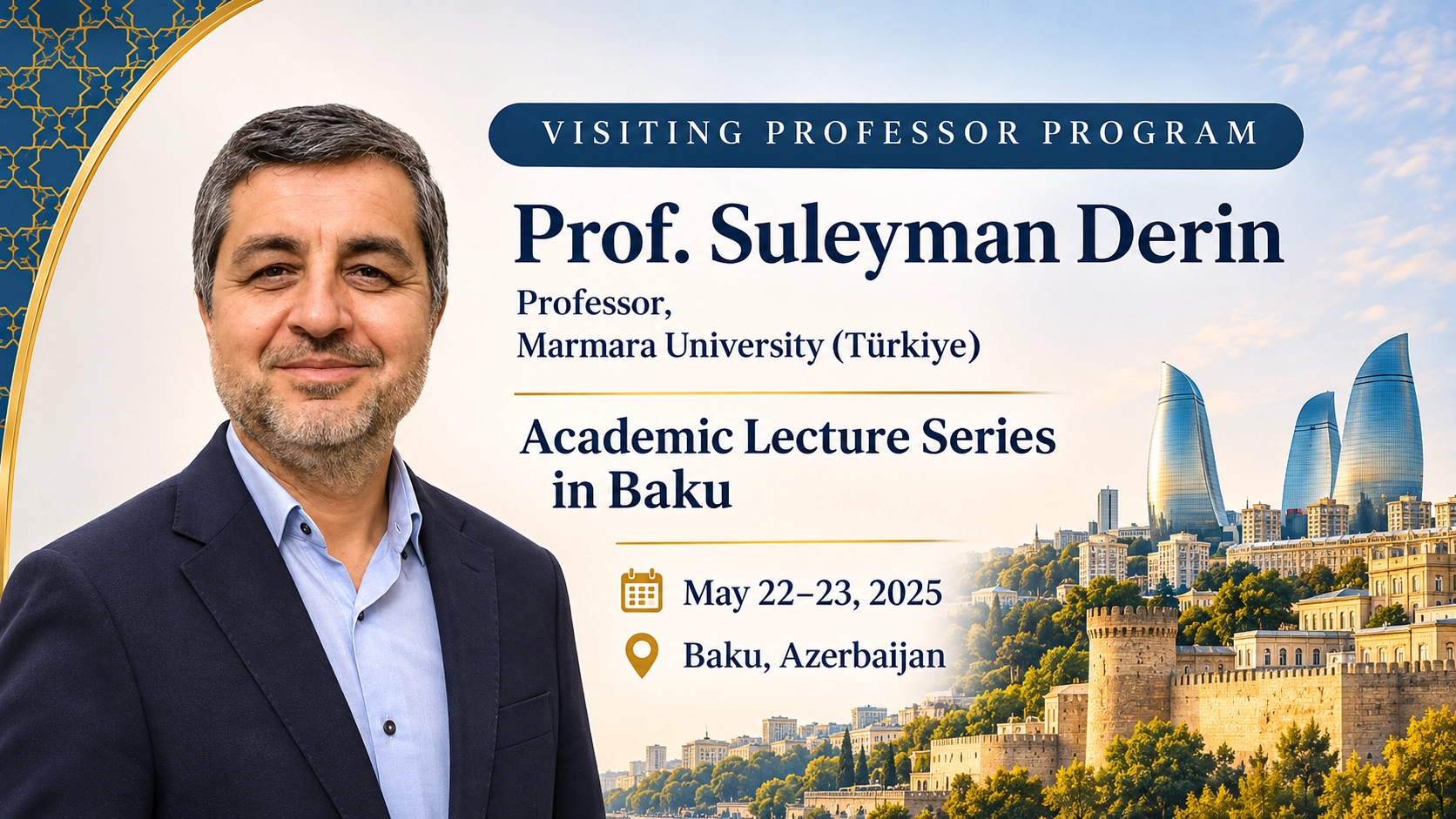
On May 22–23, 2025, a series of academic lectures by Professor Suleyman Derin of the Faculty of Theology at Marmara University (Türkiye) took place in Baku. The lectures were organized by the Institute of Knowledge Integration (IKI) as part of its international Visiting Professor Program. Hosted by the Azerbaijan Institute of Theology, the events focused on Islamic psychology, spiritual development, emotional well-being, and the Sufi intellectual heritage.
The initiative aimed to strengthen international academic cooperation, expand educational and research ties, and introduce students and faculty members to contemporary scholarship in Islamic psychology. Over two days, the visiting professor delivered four lectures that brought together the classical Islamic spiritual tradition and contemporary questions concerning human psychology and emotional life.
Professor Suleyman Derin is a scholar specializing in Sufism and Islamic psychology. He graduated from a faculty of theology in Istanbul and earned his PhD from the University of Leeds (United Kingdom) in 1999. His doctoral dissertation explored different approaches to the concept of love in Sufism, with particular attention to its psychological dimensions.
His academic work focuses primarily on Sufi psychology, spiritual education, and the relationship between religious experience and psychological processes. The intellectual legacies of prominent Muslim thinkers, including Abu Hamid al-Ghazali, Muhyiddin Ibn Arabi, and Jalaluddin Rumi, occupy an important place in his research.
Professor Derin is the author of scholarly publications and books on Islamic spirituality and psychology. His works include Divine Love in Sufism, Kuran’da Seyr u Süluk (Spiritual Training in the Qur'an), and studies of psychological approaches in the writings of Rumi and al-Ghazali. His research interests encompass both classical Sufi concepts and contemporary approaches to examining them within psychological scholarship.
The first day of the lecture series, May 22, was devoted to the theme “Shaping Our Emotional Life from the Examples of Prophets.” Professor Derin delivered two consecutive lectures exploring the significance of prophetic examples for understanding human emotions, moral education, and the development of inner resilience.
The sessions addressed the role of spiritual values and ethical principles in human emotional life. Drawing on examples from the lives of the prophets, the subject provided a framework for considering patience, compassion, self-control, and responsibility as essential dimensions of personal development and spiritual growth.
The lectures offered an opportunity to reflect on the relationship between Islamic ethics and contemporary understandings of emotional well-being, highlighting the relevance of religious heritage to the study of human inner experience.
On May 23, the program continued with a lecture entitled “Rumi and Giving Therapy through Stories,” devoted to the spiritual and psychological dimensions of Jalaluddin Rumi's writings.
The theme placed particular emphasis on the significance of storytelling within the Sufi tradition. Rumi's stories and parables represent not only literary works but also important means of moral guidance, self-knowledge, and reflection on human experiences.
Exploring Rumi's intellectual heritage offered an opportunity to consider how literary imagery, symbolism, and instructive narratives can contribute to a deeper understanding of emotional states, inner conflicts, and spiritual aspirations.
The final lecture, held on May 23, addressed the topic “Psychological Wellbeing and Marriage from an Islamic Perspective.”
The session focused on psychological well-being in family life, the importance of spiritual and ethical values in marital relationships, and the roles of mutual understanding, respect, and responsibility in fostering a harmonious family environment.
These questions are particularly relevant to contemporary research on family life and interpersonal relationships. The Islamic tradition provides a rich ethical and spiritual foundation for reflecting on family well-being, emotional support, and mutual responsibilities between spouses.
The interdisciplinary nature of Professor Derin's academic work added particular value to the lecture series. His research brings together Islamic theology, the Sufi tradition, and psychological scholarship, opening further perspectives for exploring the spiritual and emotional dimensions of human personality.
Alongside his teaching and research activities, Professor Suleyman Derin is actively involved in promoting scholarly knowledge in Islamic psychology. He hosts a radio program entitled “Sufism and Human Psychology,” which explores the relationship between spirituality and psychology through discussions involving scholars and specialists in the field.
The lecture series at the Azerbaijan Institute of Theology formed part of the international Visiting Professor Program implemented by the Institute of Knowledge Integration to promote academic mobility, strengthen educational and research partnerships, and expand opportunities for intellectual exchange among scholars and academic institutions from different countries.
Such initiatives introduce university communities to contemporary fields of research, create opportunities for interdisciplinary dialogue, and broaden approaches to studying the Islamic intellectual heritage in relation to current scholarly questions.
Professor Suleyman Derin's visit to Baku represented a valuable example of international academic cooperation aimed at deepening knowledge of Islamic psychology, spiritual education, and the Sufi tradition. The lecture series highlighted the importance of engaging with the rich heritage of Islamic thought when exploring emotional well-being, personal development, and family relationships. It also underscored the potential for further academic and educational cooperation between institutions in Azerbaijan and Türkiye.